Quick answer
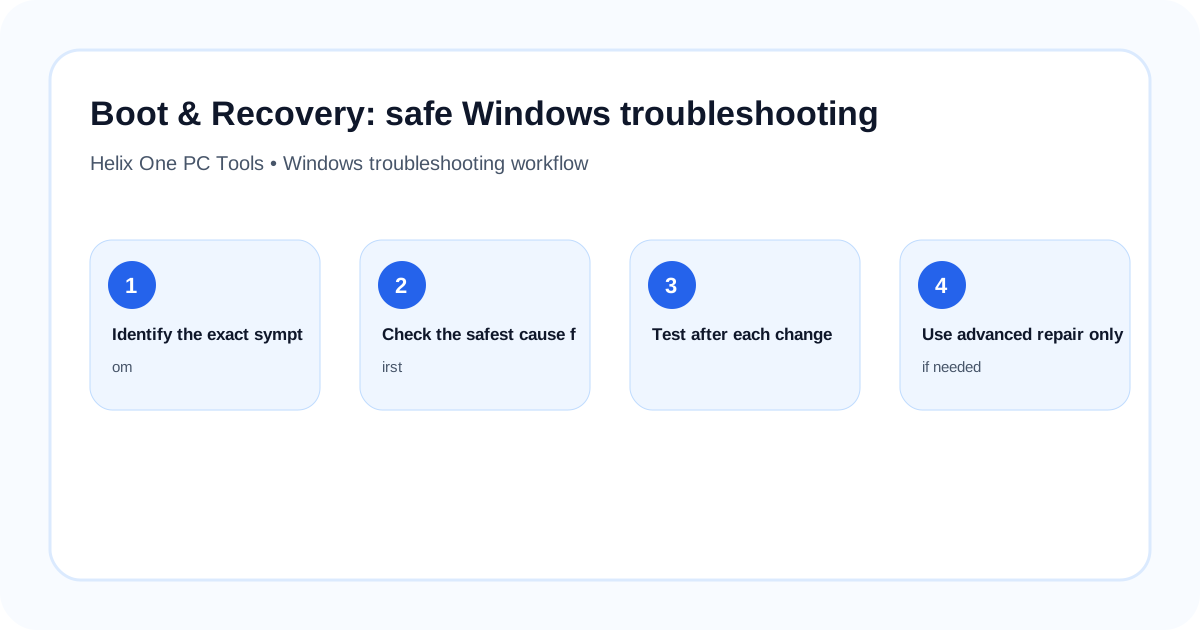
If you are seeing system restore failed, do not begin with random registry edits, driver packs, DLL downloads, or a Windows reset. First reproduce the problem, capture the exact message or behavior, and work through the checks below one at a time. The order matters because each result tells you what to try next.
Common reasons this happens
- A Windows setting, service, driver, app, account, or device state related to system restore failed.
- A recent Windows update, software change, driver change, or restart/power event.
- A temporary condition that disappears after restart but returns under the same workload.
- A deeper system or hardware issue when the problem is repeatable across apps or after clean restart.
Step-by-step solution
Restart and reproduce the issue
Restart Windows, repeat the exact action that causes the problem, and note the full message, code, device, app, or screen state.
Check what changed
Think about recent Windows updates, driver changes, new software, account changes, hardware connections, or security alerts that happened before the issue began.
Protect important data first
If Windows boots intermittently, back up important files before changing boot or recovery settings.
Use Windows Recovery Environment
Open Advanced startup and try Startup Repair or Safe Mode when the symptom supports it.
Remove the most recent relevant change
Undo a recent driver/update only when the timing matches the failure.
Escalate repeated boot failures
Repeated storage errors, BitLocker prompts, or inaccessible boot devices need cautious diagnosis before reset/reinstall.

How to know which step worked
Use the same test each time. If the issue happens only in one application, keep the investigation focused on that application before changing Windows globally. If it affects several unrelated apps or devices, broaden the investigation to Windows services, drivers, storage, memory, security, or hardware. Write down any error code exactly as shown because a single digit can change the correct repair path.
Before advanced Windows repair
Save important work and back up irreplaceable files. Keep a laptop connected to power. If BitLocker or device encryption is enabled, make sure the recovery key is available before boot or recovery changes. Commands such as DISM, SFC, CHKDSK, service resets, registry edits, driver removal, System Restore, Reset this PC, and in-place repair all have legitimate uses, but none should be used simply because a basic fix did not work once.
What not to do
- Do not download random DLL files, drivers, or “one-click repair” packages from unknown websites.
- Do not disable security software or Windows services permanently just to hide the symptom.
- Do not make several major changes at the same time; you will not know what actually fixed the issue.
- Do not reset or reinstall Windows before protecting important data and checking whether a narrower repair is available.
Recommended next path
Recommended next path
Use the Windows built-in tool or official device/software vendor path that matches the evidence above. Avoid installing unrelated “fix everything” utilities for a specific driver, network, boot, or hardware problem.
Still not fixed?
Return to the Windows Problem Finder and enter the exact error code, application/device name, and what changed before the problem started. You can also contact support@helixonepc.com. The more exact the description, the more precise the troubleshooting path can be.
Related Windows help
Browse Windows Help · Windows Error Lookup · All Guides · Guided Diagnosis